The Times They Are A-Changin’

Come senators, congressmen
Please heed the call
Don’t stand in the doorway
Don’t block up the hall
For he that gets hurt
Will be he who has stalled
There’s a battle outside and it is ragin’
It’ll soon shake your windows and rattle your walls
For the times they are a-changin’

So sang Bob Dylan in The Times They Are a-Changin’ from his third album of the same name released in early 1964 which makes it 50 years old this year.

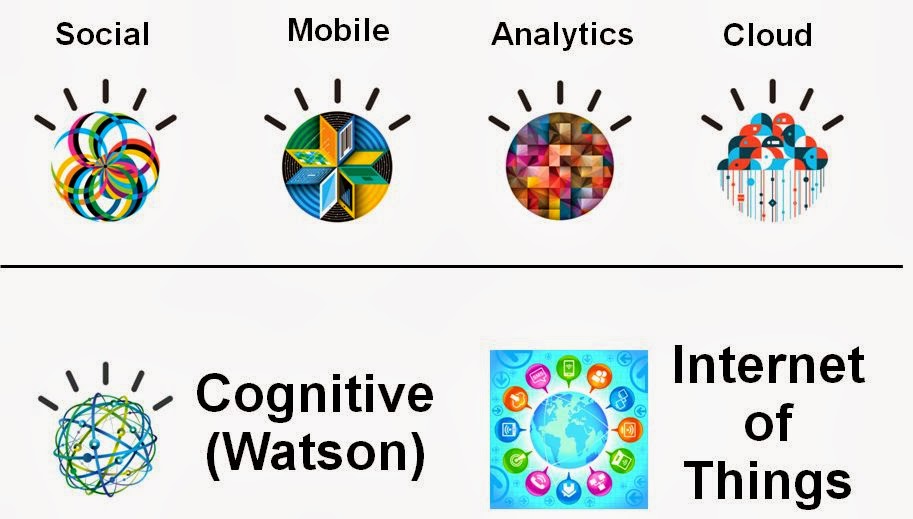
These are certainly epochal changing times as we all try to understand the combined forces that social, mobile, analytic and cloud computing are going to have on the world and how we as software architects react to them.

You may have noticed a lack of posts in this blog recently. This is partly due to my own general busyness but also due to the fact that I have been trying to understand and assimilate myself what impact these changes are likely to have on this profession of ours. Is it more of the same, just that the underlying technology is changing (again) or is it really a fundamental change in the way the world is going to work from now on? Whichever it is these are some of the themes I will be covering in upcoming posts in this (hopefully) reinvigorated blog.

I’d like to welcome you to my new place for Software Architecture Zen on the WordPress blogging platform. I’ve been running this blog over on Blogger for getting on five years now but have decided this year to gradually move over here. I hope my readers will follow me here but for now aim to put posts in both places.
The Art of the Possible

This is an edited version of a talk I recently gave to a client. The full talk used elements of my “Let’s Build a Smarter Planet” presentation which you can find starting here.

The author, entrepreneur, marketer, public speaker and blogger Seth Godin has a wonderful definition for what architects do:

Architects take existing components and assemble them in interesting and important ways.

Software architects today have at their disposal a number of ‘large grain’ components, the elements of which we can assemble in a multitude of “interesting and important” ways to make fundamental changes to the world and truly build a smarter planet. These components are shown in the diagram below.

The authors Robert Scoble and Shel Israel in their book Age of Context describe the coming together of these components (actually their components are mobile, social, data, sensors and location) as a perfect storm comparing them with the forces of nature that occasionally converge to whip up a fierce tropical storm.

Of course, like any technological development, there is a down side to all this. As Scoble and Israel point out in their book:

The more the technology knows about you, the more benefits you will receive. That can leave you with the chilling sensation that big data is watching you…

I’ve taken a look at some of this myself here.

Predicting the future is of course a notoriously tricky business. As the late, great science fiction author Aurtur C. Clarke said:

When a distinguished but elderly scientist states that something is possible, he is almost certainly right. When he states that something is impossible, he is very probably wrong.

The future, even five years hence, is likely to be very different from what it is now and predicting what might be or not be, even that far ahead, is not an exact science. Despite the perils of making predictions such as this IBM Research’s so called 5 in 5 predictions for this year describe five innovations that will change the way we live, from classrooms that learn to cyber guardians, within the next five years. Here are five YouTube videos that describe these innovations. Further information of 5 in 5 can be found here.

  1. The classroom will learn you.
  2. Buying local will beat online.
  3. Doctors will routinely use your DNA to keep you well.
  4. The city will help you live in it.
  5. A digital guardian will protect you online.

We already have the technology to make our planet ‘smarter’. How we use that technology is limited only by our imagination…